Why is Growth Slowing Down? The Revenue Reality for B2B Software
Understanding why traditional approaches fail and how telemetry-driven intelligence changes the equation
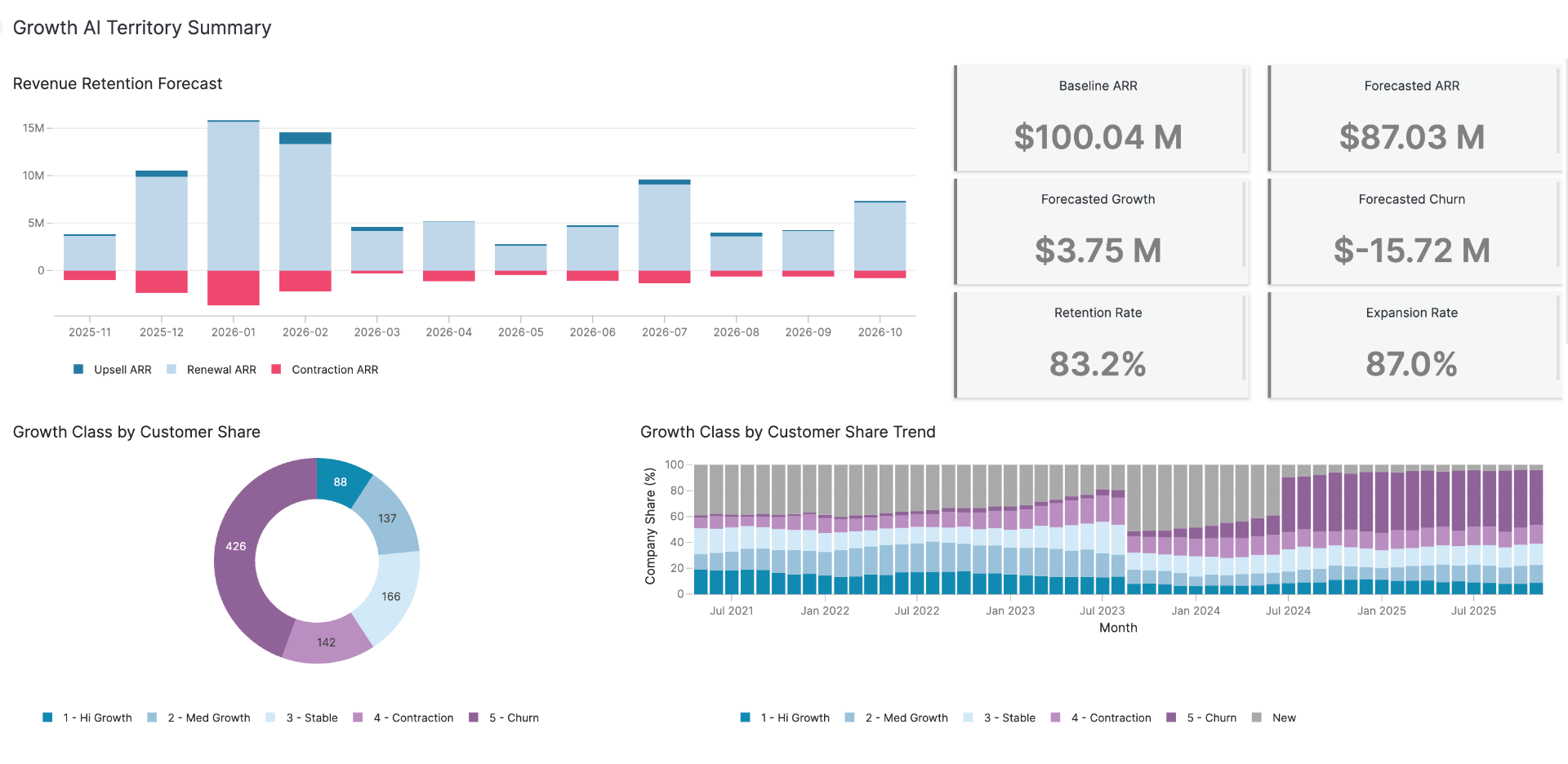
For years, revenue teams have tried to grow by optimizing workflows, tightening processes, and creating health scores. Informing those actions is machine-learning intelligence based on human data to try and stave off churn and stabilize their revenue.
The results speak for themselves. According to SBI, 58.8% of B2B organizations saw NRR decline over the last two years. Business leaders continue to explore the data their teams generate in the hopes it will lead to better decisions, better bets and better revenue.
But, the truth isn't in what people say, it's in what they do. To spur growth, you need to understand behavior and that lives in telemetry.
What's the Problem with Human-Generated Data?
Most companies and market solutions rely on subjective inputs: CRM notes, NPS scores, reactive health indicators, or the "feel" of the relationship. The challenge with human-generated data is that it paints only a partial picture of account health, is influenced by emotion and often arrives too late for teams to act.
The consequence is surprise churn, which is preventable but nearly impossible to see with traditional systems. In one recent example from a customer, their account lead told them a customer appeared happy, the relationship was strong, and they forecasted a safe renewal.
Telemetry told a different story: no product expansion, declining usage, stagnating adoption. Thirty days before renewal, they churned. The financial and operational shockwaves were immediate.
The reality is, no matter how strong the relationship, the CS leader or the signals from CRM, you're placing bets on unreliable data.
What's the Role of Telemetry in Predictive Intelligence?
Telemetry changes the visibility equation by grounding predictions in objective customer behavior on a product. It can provide 80% of the signal that human-generated data can't because it reveals how people actually interact with software. Not on an account basis but across an entire customer base during their customer journey.
Why Doesn't Everyone Use Telemetry Data?
The reality is that telemetry is not text and it's a lot of data. So a LLM can't understand what it is looking at and CRMs can't ingest it because it doesn't map to fields. More importantly, marrying telemetry to CRM data takes experience and expertise and you still have to translate what you find into comprehensible intelligence for GTM teams.
What is the Role of Forward Deployed Engineers?
Forward deployed engineers translate telemetry into explainable models tailored to each customer's business context. They help GTM leaders understand: Why an account is failing to adopt, What behaviors separate growing customers from stagnant ones and Which actions will change forecast outcomes. This helps CROs set strategy, CPOs sharpen product and CMOs enrich customer journeys.
What Makes QuadSci Different?
QuadSci ingests billions of product telemetry signals, far deeper and broader than the CRM- or workflow-based data sources of other market solutions. We activate forward deployed engineers to make sense of your telemetry and translate it into predictive intelligence that reduces churn and unlocks growth — 12-month predictive accuracy up to 94%. This agentic guidance built directly on usage data gives teams the time and intelligence they need to actually affect change with their customers.