Unlocking Expansion: Growth Starts With Your Customers, Not Your Pipeline
By QuadSci Team
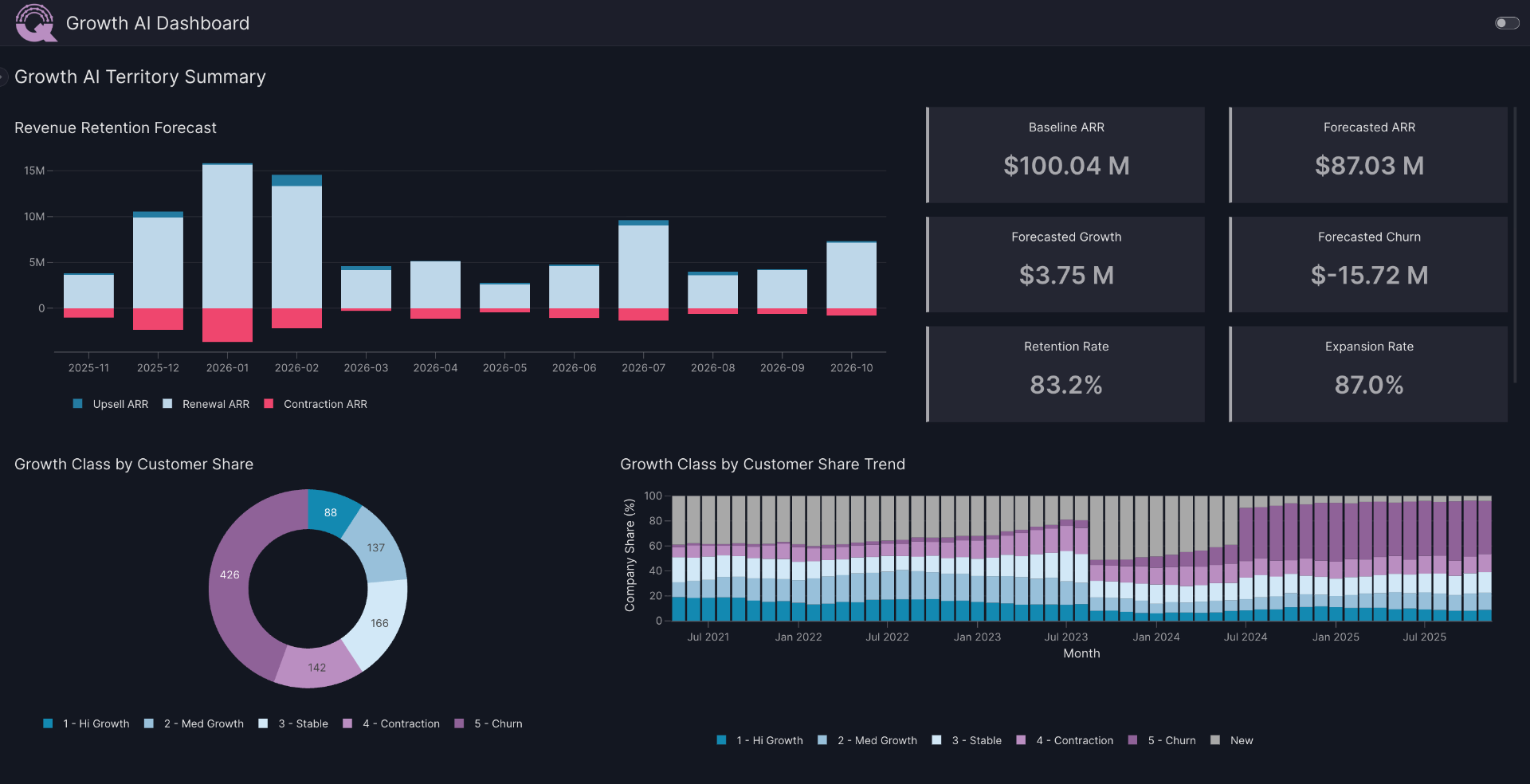
Top-performing software companies don't rely on net-new revenue to grow. The majority of their expansion comes from their existing customer base.
But so much emphasis, time and money is spent on the pipeline. At its heart, pipeline is a register of intent and growth in the customer base doesn't come from intent, it comes from behavior.
Where Expansion Actually Begins
Long before a deal is created, customers demonstrate patterns that correlate with growth. They expand usage across teams, adopt more advanced features, or integrate the product into workflows that increase its importance to the business. These signals are continuous, behavioral, and far more predictive than what is captured in CRM or engagement systems.
Product telemetry becomes critical here because it reflects what customers are actually doing, not what has been recorded or reported. Across a customer base, consistent patterns begin to emerge. Some behaviors reliably precede expansion, while others indicate that an account is unlikely to grow, even if it appears stable on the surface.
When these patterns are analyzed at scale, expansion stops looking like a discrete event and starts to look like a trajectory. Accounts are not simply categorized as opportunities or not. They are understood in terms of how their behavior is evolving relative to others, which makes it possible to identify growth while it is still forming.
Pipeline captures the moment an opportunity is recognized. Behavioral data captures the process that creates it. The difference between the two is timing, and in expansion, timing determines whether growth is captured or missed.
From Pipeline Creation to Pipeline Confirmation
Instead of being the starting point for expansion, the pipeline becomes a confirmation of what is already happening within the account. Opportunities are created based on observed behavior rather than speculative outreach. Forecasts become more grounded because they reflect how customers are actually using the product, not just how deals are progressing.
Sales teams are no longer responsible for discovering expansion in isolation. They are working from a system that surfaces where growth is most likely to occur and why, which creates more consistency across accounts and reduces dependence on individual intuition.
What Changes for Revenue Teams
Finding expansion without relying on a pipeline does not mean abandoning sales discipline. It means changing the inputs that guide it.
Sales teams focus on accounts where behavior indicates readiness rather than casting a wide net. Customer success aligns engagement to reinforce the usage patterns that lead to growth. Marketing targets accounts based on adoption and expansion potential, not just intent signals.
The organization begins to operate from a shared understanding of where value is increasing.
Over time, this leads to a more predictable expansion motion. Growth becomes less dependent on timing and individual execution and more tied to observable customer behavior, which improves alignment across teams and increases confidence in decision-making.
A Different Way to Think About Growth
Pipeline will always play a role in how revenue is managed. But when it's the only lens, it obscures the most important signal in a SaaS business: how customers are actually using the product.
Teams that learn to see that behavior clearly gain access to opportunities that would otherwise remain hidden. In a market where growth is harder to find and less forgiving to miss, that visibility is not just an advantage. It is becoming a requirement.